The Reality of High-Volume Hiring
High-volume hiring is where traditional recruitment systems start to crack. Companies hiring hundreds or thousands of candidates per year face a familiar set of challenges that technology alone has not solved.
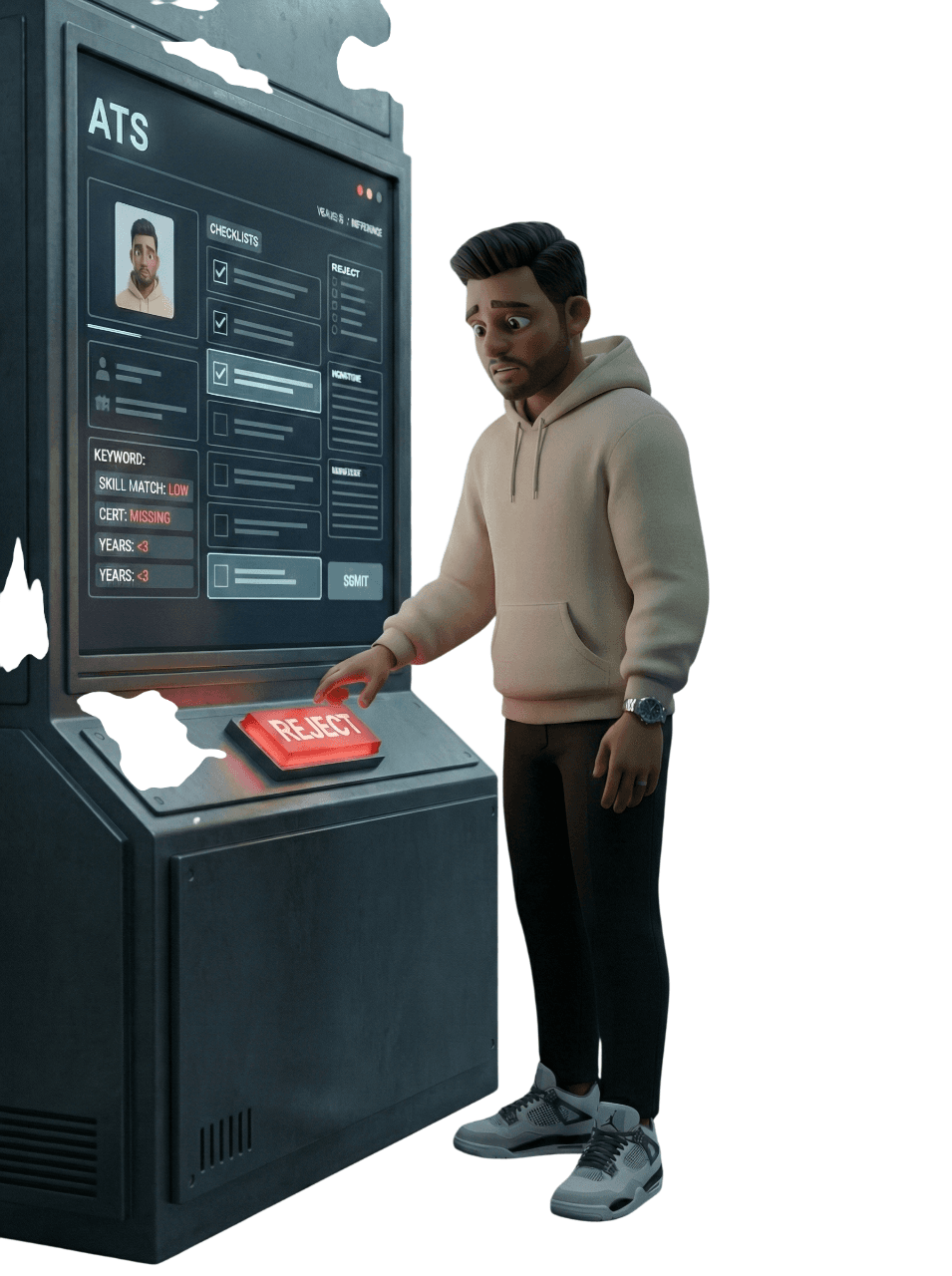
💡Despite modern ATS tools, much of the process still relies on manual effort, human endurance, and heuristic judgment.

The Scale Problem
Thousands of applications per role. Recruiters juggling speed with quality. Business teams demanding fast closures. Candidates dropping off due to delays. Interviewers stretched thin.
💡Hiring teams work harder, but outcomes do not improve proportionally.

Traditional High-Volume Workflow
To understand the impact of GenAI, it is important to first look at how high-volume hiring typically works.
Job Description Creation
Recruiters manually draft or reuse JDs with vague skill descriptions
Resume Screening
Hundreds of resumes filtered by keywords under time pressure
Interview Scheduling
Back-and-forth emails leading to candidate drop-offs
Interviews & Feedback
Inconsistent questions, varying standards, delayed decisions
The Hidden Cost
Recruiters were not just hiring, they were processing noise. Speed came at the cost of fairness. Fairness came at the cost of speed. This trade-off became the defining constraint of high-volume recruitment.
💡Traditional automation reduced effort but did not improve hiring quality.
Why Traditional Automation Hit a Ceiling
Most recruitment teams already use automation: ATS filters, email templates, scheduling tools. But these systems are rule-based. They struggle with understanding context in resumes, interpreting transferable skills, evaluating open-ended responses, and scaling human judgment.
💡At high volumes, automation reduced effort but did not improve hiring quality.
Enter Generative AI as Co-Pilot
Instead of replacing recruiters, the hiring team introduced GenAI as a co-pilot, inserted only at points where human judgment was being overloaded. The key principle: AI supports decisions. Humans make them.
💡AI supports decisions. Humans make them.

Where GenAI Was Introduced
GenAI was selectively deployed at high-impact bottlenecks in the hiring workflow.
Resume Understanding
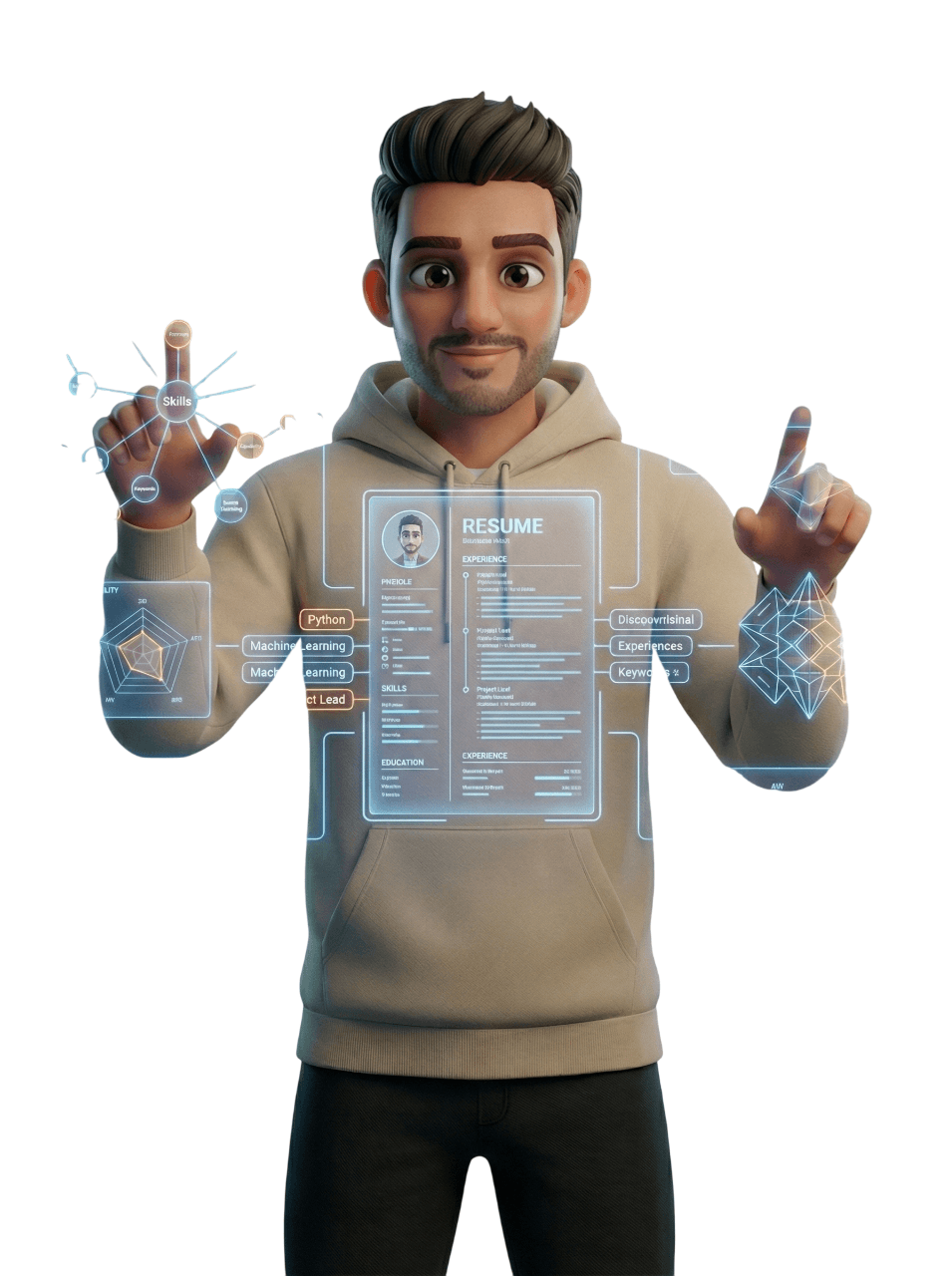
Parse and extract skills, experience patterns, project depth
Skill Mapping
Compare extracted skills against role expectations
Structured Screening
AI-led role-specific and behavioral interviews
Response Analysis
Generate structured summaries and skill indicators
Decision Support
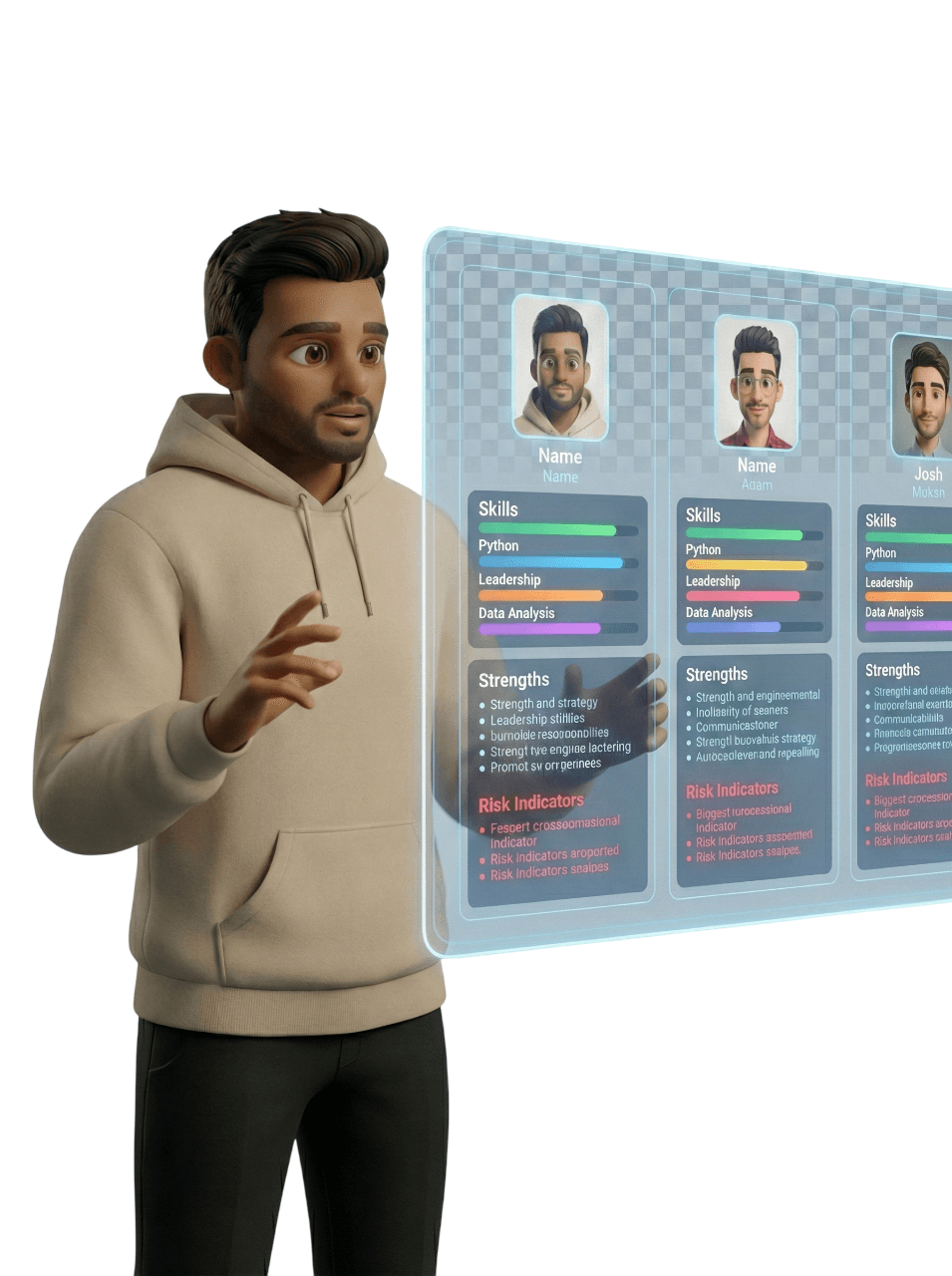
Comparison views highlighting strengths and risks
Human Final Call
No final recommendations, only insights for recruiters
Resume Understanding, Not Rejection
GenAI parsed resumes to extract skills, experience patterns, and project depth. It normalized different resume formats into structured candidate profiles. Recruiters reviewed summarized skill profiles, not raw resumes.
💡Shortlisting shifted from keywords to capability signals.
AI-Led Structured Screening
Candidates received automated interview links. GenAI conducted role-specific questions, scenario-based assessments, and behavioral prompts. Interviews happened asynchronously, scaling interview capacity without interviewer burnout.
💡Interview capacity scaled without interviewer burnout.

Candidate Comparison Dashboard
AI provided comparison views across candidates, highlighting strengths, risks, and role fit. GenAI analyzed candidate responses and generated structured summaries with skill indicators and communication signals.
💡Recruiters reviewed insights, not raw recordings or transcripts.
The After State: GenAI-Augmented Workflow
With GenAI integrated, the workflow transformed while keeping humans at the center.
AI-Powered
Resume screening, interview standardization, feedback structuring
Human-Driven
Final shortlisting, cultural judgment, offer decisions, candidate conversations
💡 The system did not remove humans. It removed chaos.
Measurable Impact
While this case study focuses on awareness, the outcomes were clear and measurable across multiple high-volume roles.
💡 Quality did not decline. It improved.
Key Learnings for Recruitment
Several patterns emerged that are relevant beyond this case.
Structured Hiring
GenAI works best with clear roles and skill definitions
Skills Over Pedigree
Capability signals matter more than resume branding
Recruiters Evolve
From screeners to evaluators to decision-makers
Speed + Fairness
AI removes bottlenecks that forced trade-offs
Workflow First
Where you place AI matters more than which model
Data-Informed
Decisions based on signals, not gut instinct
The Future of High-Volume Hiring
High-volume hiring is moving toward a new default: skills-first evaluation, structured interviews at scale, faster hiring cycles without burnout, and data-informed decisions instead of gut instinct.
💡Companies that delay this shift will not just hire slower. They will hire worse.
The Real Competitive Advantage
Generative AI did not replace recruiters. It absorbed the noise so recruiters could focus on judgment. And in high-volume hiring, judgment, not speed, is the real competitive advantage.
💡Judgment, not speed, is the real competitive advantage.